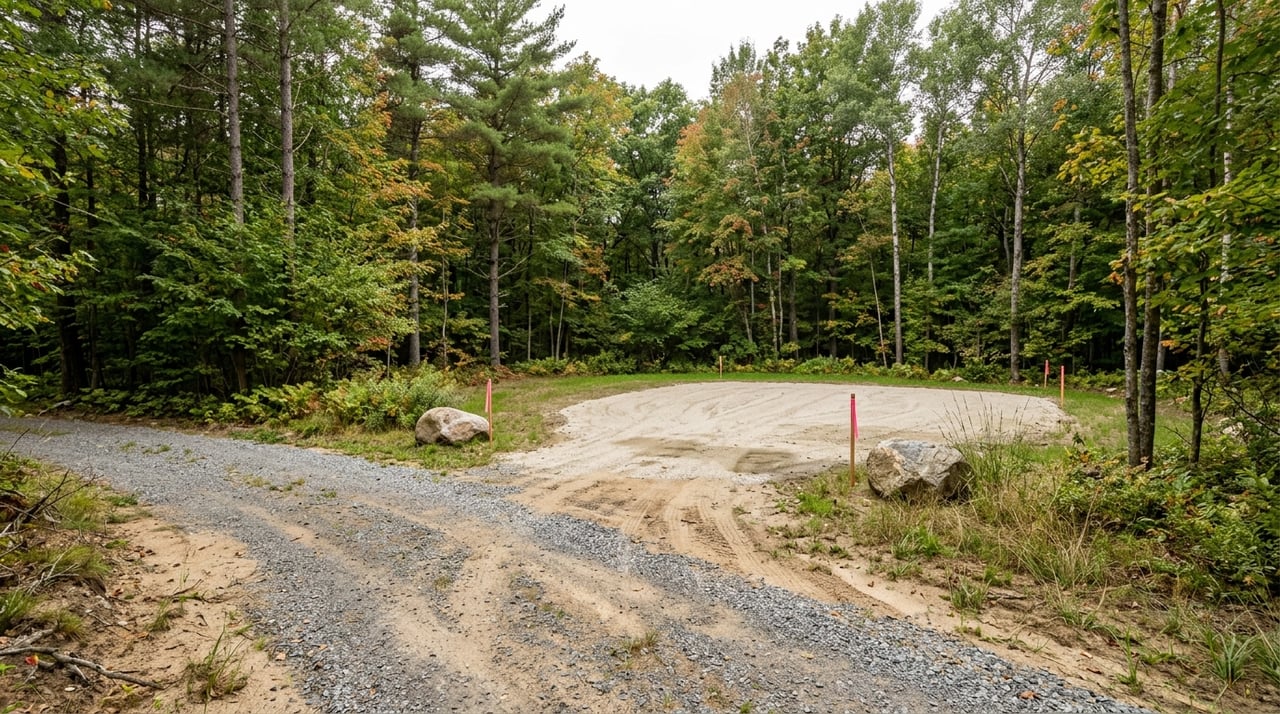
Thinking about buying land in Benzie County? A beautiful parcel can spark big plans, but raw land comes with a different set of questions than an existing home. If you are looking at acreage near Benzonia, the key is understanding what you can actually do with the property before you buy. Let’s dive in.
Start With Local Zoning
One of the most important things to know about Benzie County land is that zoning is handled locally, not through one countywide zoning office. According to the Benzie County Master Plan, zoning is administered by the individual townships, villages, and cities. That means your first due diligence step is figuring out which local jurisdiction governs the parcel.
If the land is inside the Village of Benzonia, you will want to review the village’s zoning ordinance, zoning map, permit forms, and development guide. The village also offers free conceptual review meetings before site-plan review, which can be a helpful early step if you are still shaping your plans.
If the parcel is in Benzonia Township, the rules are different. The township uses its own zoning ordinance and district framework, with districts that range from residential and rural preservation to commercial and light industrial. The township master plan also identifies overlay areas that can affect what is possible on a site.
Know the Overlay Areas
Not every acre is equal, even when two properties look similar online. In Benzonia Township, overlay areas include the Crystal Lake Watershed, Platte Lake area management, the Betsie Valley Trail corridor, steep-slope areas, and corridor overlays along major highways, as outlined in the township master plan.
These overlays matter because they can influence how and where you build, access the property, or plan improvements. For example, parcels along US-31 or M-115 may be affected by corridor-overlay rules. A lot that looks straightforward on a listing sheet may come with extra review steps once you read the zoning details.
Buildability Depends on More Than Acreage
A parcel may be 5, 10, or 20 acres and still have buildability challenges. In this area, septic and well feasibility are major parts of the picture.
The Benzie-Leelanau District Health Department handles well and septic permits. Its sanitary code requires a safe and adequate water supply approved by the health officer for habitable buildings. The code also looks closely at soil types, groundwater elevation, lot size, usable area for on-site sewage disposal, and isolation distances from wetlands, surface waters, wells, and septic systems.
In practical terms, that means a large parcel on paper may still be difficult to build on if soils or groundwater conditions are poor. Before you get too attached to a property, it is smart to investigate whether the site can support the kind of home or use you have in mind.
Check Well and Septic Records Early
If you are buying a parcel with an existing private well or septic system, the local rules are especially important. Under the district sanitary code, a transfer of property with a private well and or septic system generally requires a health-department evaluation, with written results provided to the buyer, unless an exemption applies.
If a system is not in substantial conformance, corrective action and timelines may follow. That is why records review matters early in the process. The health department’s digital records portal lets you search by parcel number, which can help you screen files before spending money on deeper inspections.
Another issue to check is public utility availability. The sanitary code limits when a private water-supply permit can be issued if connection to an approved public water supply is available. In other words, do not assume a private well is automatically allowed just because the property is vacant.
Wooded Lots Need Extra Attention
Wooded acreage can be appealing for privacy, scenery, and that classic Up North feel. But trees can also hide important site conditions.
Open parcels usually make it easier to spot drainage patterns, slopes, and potential driveway routes. Wooded parcels may conceal steep areas, wet ground, or other constraints until you walk the land. In Benzonia Township, steep-slope and watershed overlays add another layer of review, and the township master plan points buyers toward careful site-specific evaluation.
Inside the Village of Benzonia, wooded lots can bring another issue into play. The village requires a tree removal permit within village limits, and the zoning administrator may need to visit the site to confirm property and right-of-way boundaries. That can be especially important when lot lines are not obvious from the road.
Confirm Road Access and Driveway Approval
A great parcel still needs workable access. If the property fronts a county road, the Benzie County Road Commission permit process may apply for driveways and right-of-way work. If access is from a state trunkline, MDOT requires a driveway permit.
This is an important step because legal road frontage does not always mean easy driveway approval. Sight lines, location, and road authority rules can affect how access is handled. If the parcel is part of a proposed split, the road commission’s land-division review application is the right place to start.
The road commission also notes that a driveway permit can be issued at no additional cost when the access road or driveways will be constructed within one year as part of the land-division review process. That can be helpful if you are buying land that is being newly divided.
Use the Plat Book as a First Pass
When you are comparing acreage options, it helps to start with good local reference material. The county’s 2024 plat book includes township maps, village maps, a county directory, a property ownership listing, a soil map, and a school-district map.
For buyers, that makes it a useful first-pass tool before you move into detailed due diligence. It will not replace zoning, title, or health-department review, but it can help you narrow your search and understand the parcel’s broader setting.
Recreation Can Shape Long-Term Value
Many buyers are drawn to Benzie County for the lifestyle as much as the land itself. The county’s official inland lake page lists lakes including Crystal Lake, Big Platte Lake, Little Platte Lake, Lower Herring Lake, and Loon Lake.
The same resource highlights regional recreation assets like the Betsie Valley Trail, a 22-mile trail from Frankfort through Elberta and Beulah to Thompsonville, and Sleeping Bear Dunes National Lakeshore, which spans 35 miles of Lake Michigan shoreline with 105 trail miles and 9 lake access ramps. If you are buying land for a future home, getaway, or long-term hold, access to these amenities may shape how you use and enjoy the property.
Land Value Works Differently
Buying land is not the same as buying an improved residential property. According to MDOT appraisal guidance, vacant land is analyzed as vacant and available using comparable vacant-land sales, while improved property analysis considers land and improvements separately.
For you as a buyer, that means price is often driven by more than just total acreage. Legal use, zoning, road access, driveway feasibility, septic and well potential, wetlands, slopes, and utility availability can all influence what a parcel is worth. Two 10-acre properties can have very different values if one is easy to build on and the other is not.
A Smart Due Diligence Checklist
Before you buy land or acreage in Benzie County, make sure you have answers to these questions:
- Which township, village, or city governs the parcel?
- What zoning district applies?
- Are there overlay districts affecting the site?
- Is a well or septic permit likely to be approved?
- Are there existing well or septic records to review?
- Is public water available, and does that affect private well options?
- What does the terrain look like in person?
- Are there wetlands, steep slopes, or drainage concerns?
- Which road authority controls access?
- Is a driveway permit required?
- If the property is being split, has land-division review started?
Why Local Guidance Matters
With land, the details matter early. In Benzie County, the right path often includes matching the parcel to the correct zoning office, reviewing overlays, checking health-department files, and confirming road access before you move forward.
That kind of local guidance can save you time, money, and frustration. If you are considering land or acreage near Benzonia or elsewhere in Benzie County, working with someone who understands the regional process can help you evaluate the property with more confidence. When you are ready to talk through your options, connect with Ken Kleinrichert for a consultation.
FAQs
What zoning office handles land in Benzie County?
- Zoning in Benzie County is handled by the local township, village, or city that governs the parcel, not by one countywide zoning office.
What should you check before buying acreage in Benzonia?
- You should confirm the zoning jurisdiction, zoning district, overlay areas, well and septic feasibility, road access, and any permit requirements tied to the parcel.
How do well and septic rules affect vacant land in Benzie County?
- Well and septic approval depends on site-specific factors like soils, groundwater elevation, lot size, usable area, and required setbacks from water, wetlands, wells, and septic systems.
What is different about buying wooded land in the Village of Benzonia?
- In the Village of Benzonia, tree removal within village limits requires a permit, and site visits may be needed to verify boundaries and right-of-way lines.
Why can two similar-sized land parcels have different values in Benzie County?
- Parcels can vary in value based on legal use, zoning, access, driveway feasibility, utility availability, and whether the site is practical to build on, not just by acreage alone.